
Don’t Overlook This Key Component When Diagnosing AC Problems in Your Ford Escape

Air conditioning issues in your 2014 Ford Escape can arise without warning, and when they do, the temptation is to jump to conclusions: low refrigerant, a faulty compressor, or maybe a failing blower motor. But what if the problem is deeper, and quieter? What if the true culprit is the AC condenser itself?
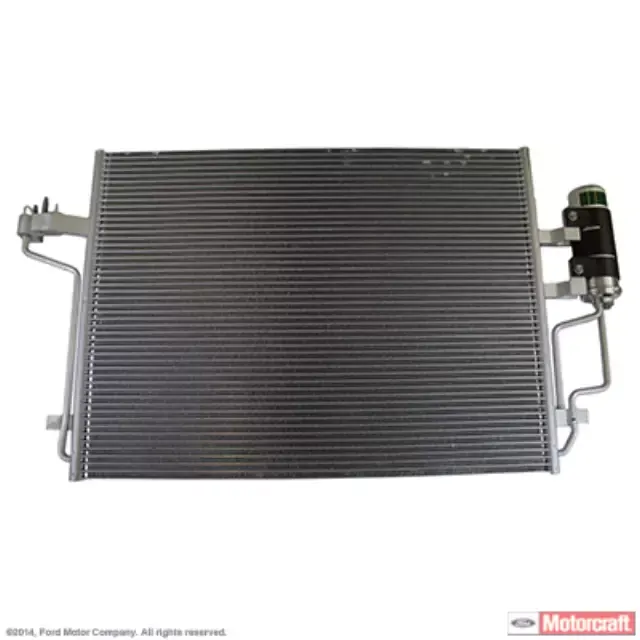
In many Ford Escape vehicles, particularly those between 8–12 years old, AC system performance often degrades not due to a single catastrophic failure, but because of gradual wear. And one of the most important, yet frequently overlooked, components is the CV6Z-19712-H, the original equipment manufacturer (OEM) condenser built specifically for your Ford Escape.
Let’s explore how this part works, why it’s so often misdiagnosed, and how replacing it with a genuine OEM version can restore comfort, prevent costly failures, and protect your entire HVAC system.
The Role of the Condenser: More Than Just Cooling
The condenser acts as the central hub for refrigerant transformation. It takes in high-pressure, high-temperature refrigerant vapor from the compressor and cools it into a high-pressure liquid. That liquid then travels through the system to deliver cool air into your cabin.
If the condenser becomes restricted, clogged with debris, or begins leaking refrigerant, the entire AC system becomes imbalanced. Pressures fluctuate. Compressor workload increases. Cabin temperatures rise, and you’re left wondering why a recharge didn’t solve the issue.
A failing condenser can introduce contaminants into the refrigerant loop, cause oil to backflow, or lead to insufficient cooling under load (such as in stop-and-go traffic). It is not just a peripheral component, it’s the gateway to performance.
Early Warning Signs of Condenser Trouble
Recognizing a worn or failing condenser isn’t always straightforward. Some symptoms may seem minor or mimic other AC failures. But these specific warning signs often indicate that the CV6Z-19712-H is on its way out:
Warm or Weak Airflow: Your AC may still blow air, but it lacks the icy cold blast it once had. That’s often a result of insufficient refrigerant condensation due to internal blockage or leakage.
Unusual System Cycling: If your compressor turns on and off rapidly, the condenser could be disrupting system pressure balance.
Oil or Refrigerant Leaks Near the Front of the Engine Bay: This is especially true when you see staining near the condenser core or lines.
High-Pressure Readings with a Full Charge: When gauges indicate excess pressure but the system is full, a restriction is usually the cause.
Noise Under the Hood When AC is On: Overworked components often buzz, hum, or rattle under strain from a failing condenser.
Many of these symptoms go unaddressed until the failure becomes more obvious. But by then, damage may have already occurred elsewhere in the system.
Why This Happens in Older Ford Escape Models
The 2014 Ford Escape, like many crossover SUVs in its class, faces a common issue: age-related system wear. Over time, road debris, internal pressure cycling, and environmental contaminants slowly degrade seals, fittings, and condenser tubing. Add years of seasonal heating and cooling to the mix, and the condenser becomes one of the most vulnerable parts of the entire system.
Notably, the condenser’s position, mounted just ahead of the radiator, leaves it exposed to salt, bugs, sand, gravel, and other abrasive forces. Minor pitting or corrosion may not seem serious at first, but they often lead to microfractures or pinhole leaks that compromise performance gradually.
Why OEM Quality Makes a Measurable Difference
Generic or aftermarket AC condensers might technically “fit” your Escape, but that doesn’t mean they’ll perform to spec. Only the genuine CV6Z-19712-H matches your vehicle’s precise:
Line connections
Fin count and spacing for airflow optimization
Heat dissipation rate
Receiver-drier integration
Mounting point alignment
Durability under Ford's original thermal cycling expectations
Cutting corners with non-OEM parts increases the risk of premature failure, noise, or even reduced fuel economy due to compressor overwork.
OEM parts are tested under the same conditions Ford used to design the Escape itself, including environmental stress, pressure cycles, and long-term durability. With an OEM condenser, your system operates at factory specs, not just acceptable tolerances.
Diagnosing the Problem Correctly
Here’s where many repairs go wrong. A tech sees warm air from the vents and assumes it’s a low refrigerant issue. A recharge is performed. The system seems fine, until a few weeks later, when the same symptoms return. It’s easy to assume the compressor is the problem or that the system wasn’t charged correctly.
What’s often missed is that a restricted or leaking condenser doesn’t always trigger a diagnostic trouble code (DTC). And unless a dye test or high-side pressure check is performed, the problem may be completely invisible during a quick inspection.
This is why Ford Escape owners, especially DIYers, should pay attention to patterns. If your AC issue returns after recharging, and there’s no obvious fault in the compressor or lines, the condenser is likely the weak link. A replacement with CV6Z-19712-H may be the most direct and cost-effective fix.
A Smart Preventive Upgrade
Replacing the condenser before complete failure isn’t just about restoring performance, it’s about safeguarding your entire HVAC system.
Benefits of proactive replacement include:
Compressor Protection: A properly functioning condenser reduces compressor strain and heat load.
Moisture Control: The integrated receiver-drier helps absorb contaminants and prevent corrosion inside the system.
Extended System Life: Cleaner refrigerant flow prevents buildup or sludge that can damage the expansion valve or evaporator.
Faster Cabin Cooling: Factory pressure ratios are restored, allowing full refrigerant expansion and cold air delivery.
Many customers report that installing the CV6Z-19712-H dramatically reduces AC cycle times and improves idle performance in hot weather.
The Installation Experience: What to Expect
Installation of the OEM condenser is typically straightforward for a professional technician. The part is designed to fit without modification and includes:
Direct-fit ports with pre-threaded fittings
Mounting tabs that match factory brackets
Factory-grade seals to prevent future leaks
After evacuation, recovery, and installation, a recharge with the correct amount of R-134a refrigerant ensures peak operation.
DIYers should ensure they have access to proper AC service tools or work with a certified shop. It’s essential that no air or moisture enters the system during installation, and all O-rings should be replaced.
Trust the Part That Ford Engineered for Your Escape
Ultimately, there’s no substitute for a part that was engineered by Ford, for Ford. The CV6Z-19712-H delivers guaranteed compatibility, proven performance, and the peace of mind that your Escape is operating the way it was designed to.
Whether you’re restoring comfort during a hot summer, protecting your compressor from premature failure, or simply avoiding recurring service visits, this one part makes all the difference.
No matter what you drive or what you’re fixing, Quirk Parts has the genuine OEM parts and accessories you need to get the job done right. From replacement components to performance upgrades, we offer factory-backed quality you can trust. Need help finding the right fit? Our team is standing by to assist. Shop online today and experience the confidence that comes with parts made to match.